Making Nutrition Easier to Understand
How Foods & Nutrients Work Together
Evidence-based explanations of food and nutrient interactions — what changes absorption, what does not, and how confident the research actually is.
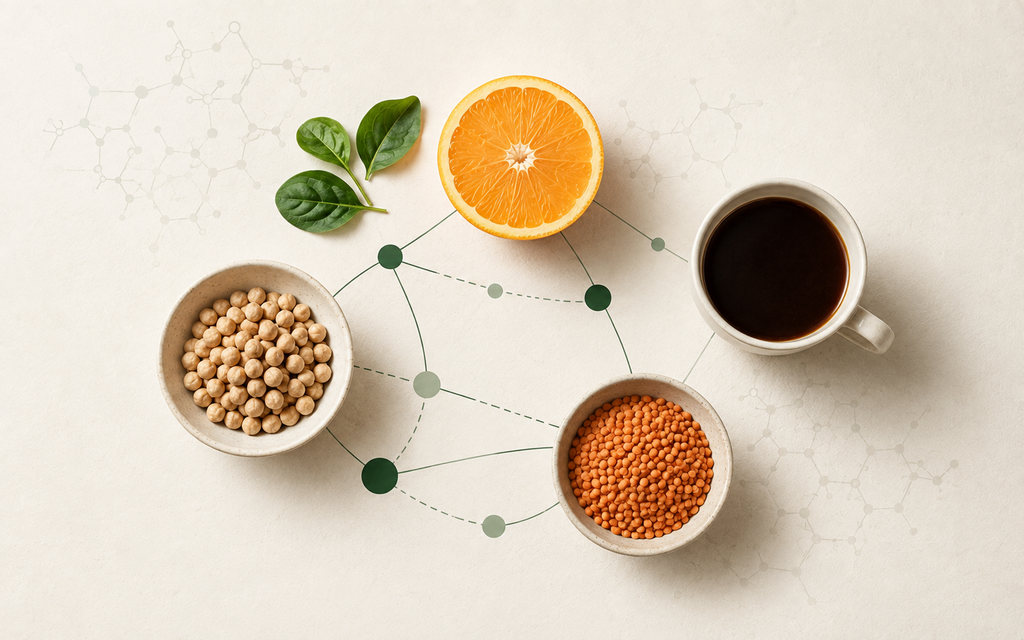
What is a nutrient interaction?
Foods and nutrients rarely act on their own. Their relationships can influence how much of a nutrient is absorbed, how it is transported, and how it is used in the body.
- They can increase absorption
- They can reduce absorption
- They can be neutral or context-dependent
- Some relationships remain uncertain
Featured interaction
Food + NutrientCan These 5 Foods Affect How Your Body Uses Egg Nutrients?
Black tea is the only one of the five with real human evidence – it reduced egg-protein amino-acid digestibility by about 17% in a controlled study. The other four claims don't hold up the…
Explore the interaction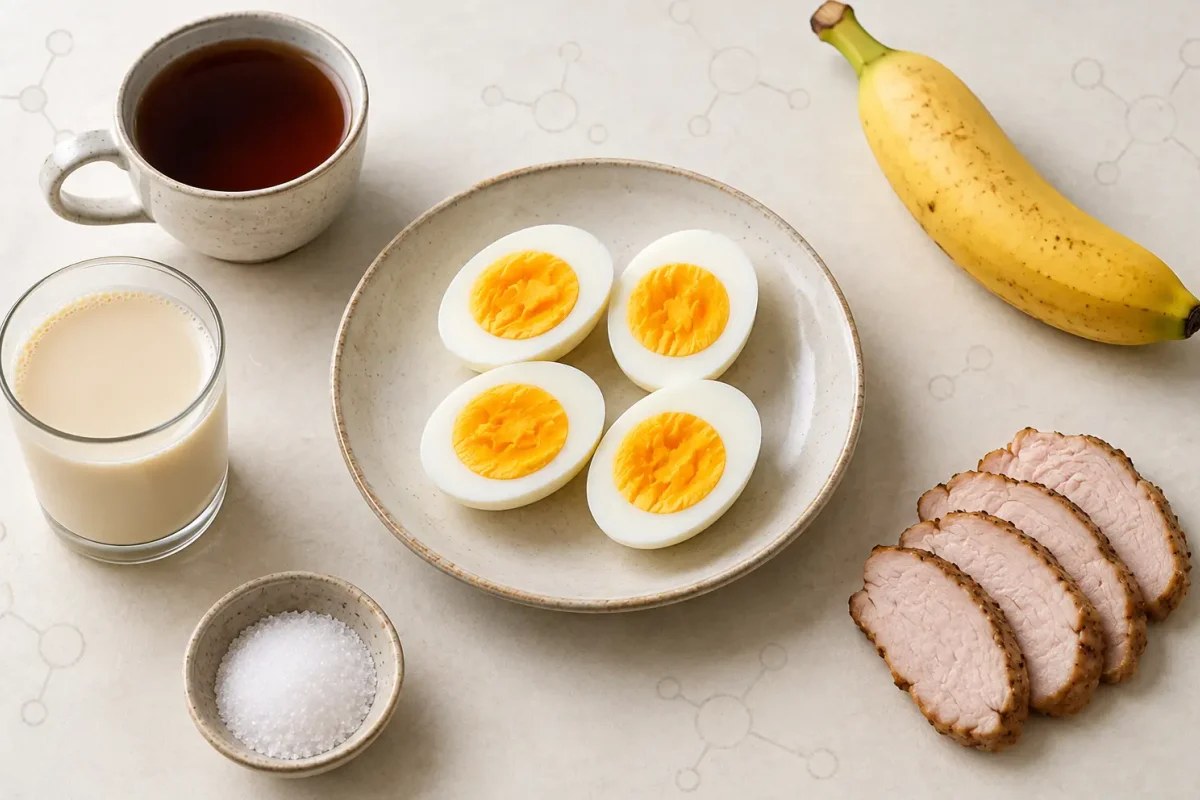
Explore the Atlas
Browse by interaction type
Every section groups interactions that work the same way, so related explanations sit together.
-
Absorption & Bioavailability
How much of a nutrient the body can actually take up from a food, and what changes that amount
3 explanations
-
Nutrient Synergy
One nutrient supporting the activity, transport or conversion of another
2 explanations
-
Food + Nutrient
Whole foods and their compounds — polyphenols, phytates — acting on a nutrient
2 explanations
-
Preparation & Meal Context
How cooking, soaking, fermentation, pairing and timing change what a meal delivers
1 explanation
Recent interactions
Newly published and recently reviewed explanations from across the Atlas.
Filter by interaction type

Fat + Fat-Soluble Vitamins: Does Eating Fat Really Improve Vitamin Absorption?
Nutrient Synergy
Dietary fat genuinely improves absorption of vitamins A, D, E and K. But the relationship isn't linear — once a meal contains…
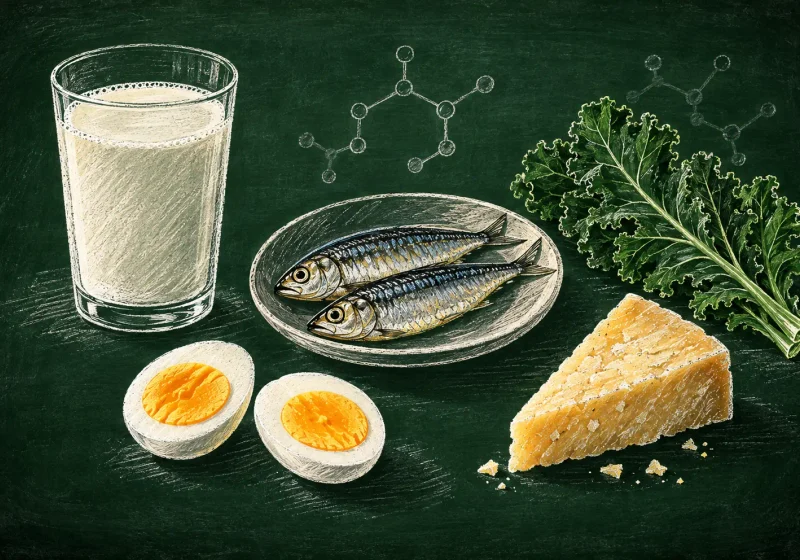
Vitamin D + Calcium: How Does Vitamin D Affect Calcium Absorption?
Nutrient Synergy
Without vitamin D you absorb 10–15% of dietary calcium; with enough, 30–40%. But a one-year trial found that pushing levels higher raised…
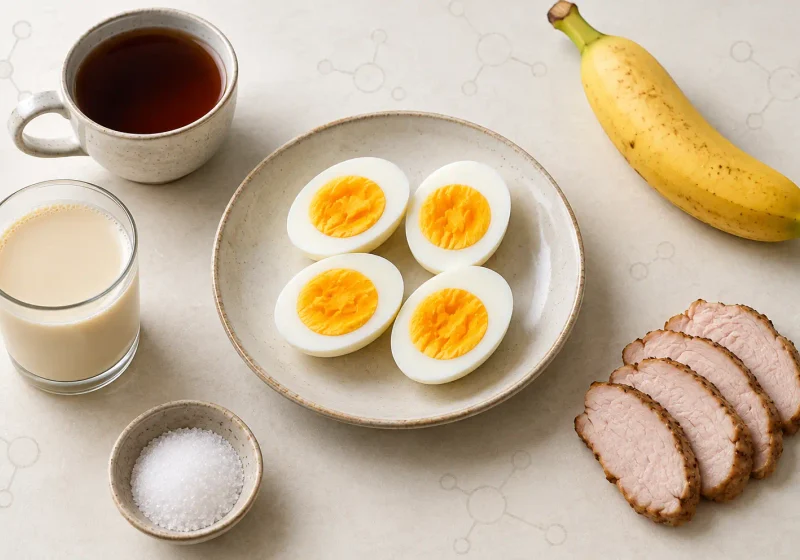
Can These 5 Foods Affect How Your Body Uses Egg Nutrients?
Food + Nutrient
Black tea is the only one of the five with real human evidence – it reduced egg-protein amino-acid digestibility by about 17%…
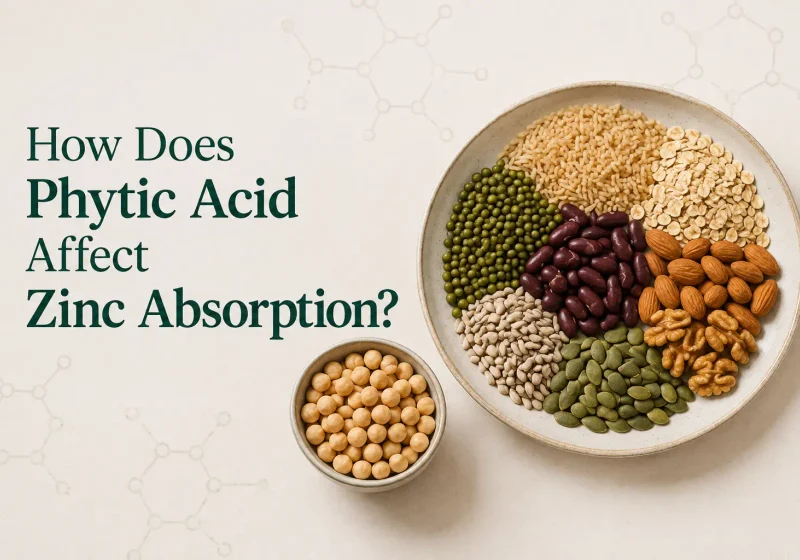
Phytate + Zinc: How Does Phytic Acid Affect Zinc Absorption?
Food + Nutrient
You can eat a food that contains zinc and still absorb less of it than you might expect. One reason is phytate.…
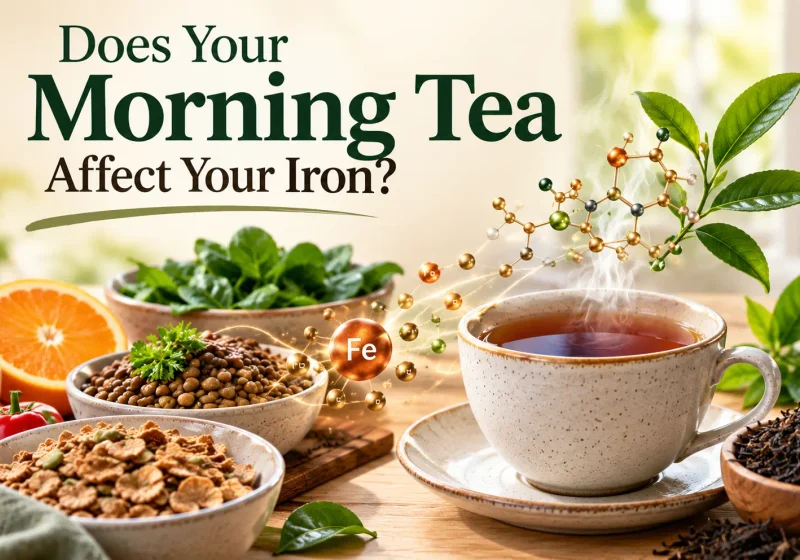
Does Your Morning Tea Affect Your Iron Intake?
Absorption & Bioavailability
If your morning routine includes a cup of tea with breakfast, you may have wondered whether that habit affects your iron. The…
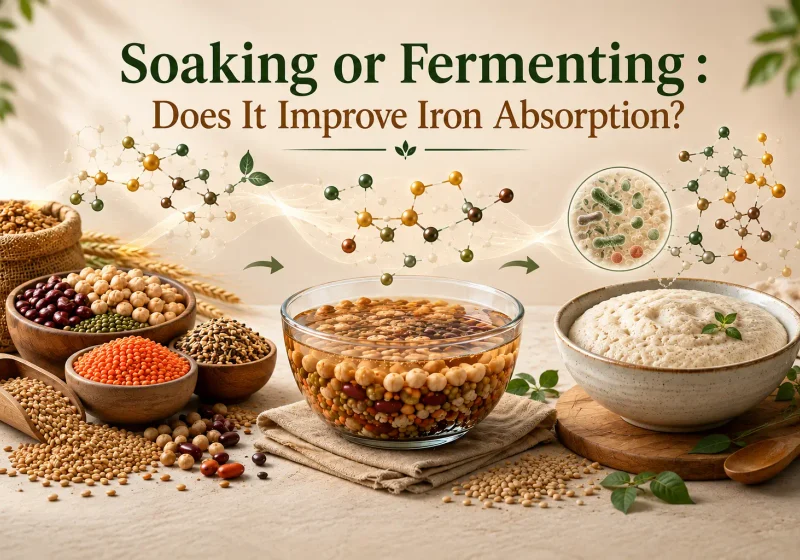
Does soaking or fermenting grains and beans change how much iron you absorb?
Preparation & Meal Context
If beans, lentils or whole grains are part of your diet, you may have heard that soaking, sprouting or fermenting them makes…
No interactions match that filter yet.
Where an interaction can happen
An interaction is not a single event. Two nutrients can affect each other at any point between the plate and the cell, and the stage where it happens determines whether it matters in practice.
- Food — the form a nutrient arrives in, and what it arrives alongside.
- Digestion — compounds are released, bound or broken down in the stomach and small intestine.
- Absorption — nutrients cross the intestinal wall, sometimes competing for the same route.
- Transport — carrier proteins and storage sites move nutrients around the body.
- Utilisation — nutrients are activated, converted or used in metabolic pathways.
Most well-documented food and nutrient interactions occur during digestion and absorption, which is why meal context and preparation come up so often across the Atlas.
Beyond “good” or “bad”
Very few interactions are simply helpful or harmful. Most depend on the amount, the form of the nutrient, the rest of the meal and the person eating it.
- Dose-dependent — an effect measurable in a laboratory dose may be small at the amounts found in a normal meal.
- Form-dependent — the chemical form of a nutrient often decides whether an interaction applies at all.
- Preparation-dependent — soaking, cooking, sprouting and fermentation can change what a food delivers.
- Context-dependent — what happens in a single test meal may not describe a whole diet over weeks.
- Sometimes uncertain — where the evidence is limited or mixed, the Atlas says so rather than picking a side.
How we handle evidence
Every explanation is written from published sources and separates what is well established from what is still being worked out.
The sources we draw on
- Peer-reviewed nutrition and physiology research
- Government and public-health nutrition resources
- Academic institutions and professional bodies
- Established food composition databases
How we describe findings
- Every article states what the evidence does not establish
- Study conditions are described, not just conclusions
- References are listed in full so you can read the original
- Explanations are updated when the evidence moves
Citing an organisation does not imply that it endorses NutriFoodGuide, reviews this site, or is affiliated with it in any way.
From the Journal
Background reading that supports the Atlas: nutrient explainers, food education and how to read nutrition research.
Explore the Nutrient Interaction Atlas
Start with a nutrient you already eat every day, and follow the relationships from there.