

Most human studies didn't test the drink you're making. They tested standardized extracts and concentrated supplements — and for turmeric especially, curcumin barely dissolves in water at all
Quick answer
Clove water, cinnamon water and turmeric water sound simple: put a spice in water, drink it regularly, and supposedly get a range of health benefits. But there is a major problem with this idea.
Most human studies do not actually test the homemade “spice water” people are drinking. Researchers have often studied standardized extracts, powders, concentrated supplements or specific formulations instead. That distinction is extremely important.
For cinnamon, human trials and meta-analyses suggest that cinnamon supplementation may modestly improve some blood-glucose measures, particularly fasting glucose. But studies vary substantially in cinnamon species, dose, preparation and duration, and the U.S. National Center for Complementary and Integrative Health says the evidence is still insufficient to clearly support cinnamon for a specific health condition.
For turmeric and curcumin, a large body of human research suggests possible effects on inflammation markers, blood glucose and some other outcomes. However, much of this research involves curcumin supplements or enhanced-bioavailability formulations, not ordinary turmeric steeped in water. Curcumin is poorly soluble in water, which makes it difficult to assume that a homemade turmeric drink delivers the same exposure used in clinical trials.
For clove water, the evidence is considerably thinner. A small human pilot study found that a standardized water-soluble polyphenolic clove extract affected glucose measurements, but it involved only 13 participants and did not test ordinary homemade clove water.
So the evidence-based answer is: these drinks may contain biologically active compounds, but there is not enough evidence to say that drinking homemade clove water, cinnamon water or turmeric water produces the impressive health effects often claimed online.
Why are these drinks so popular?
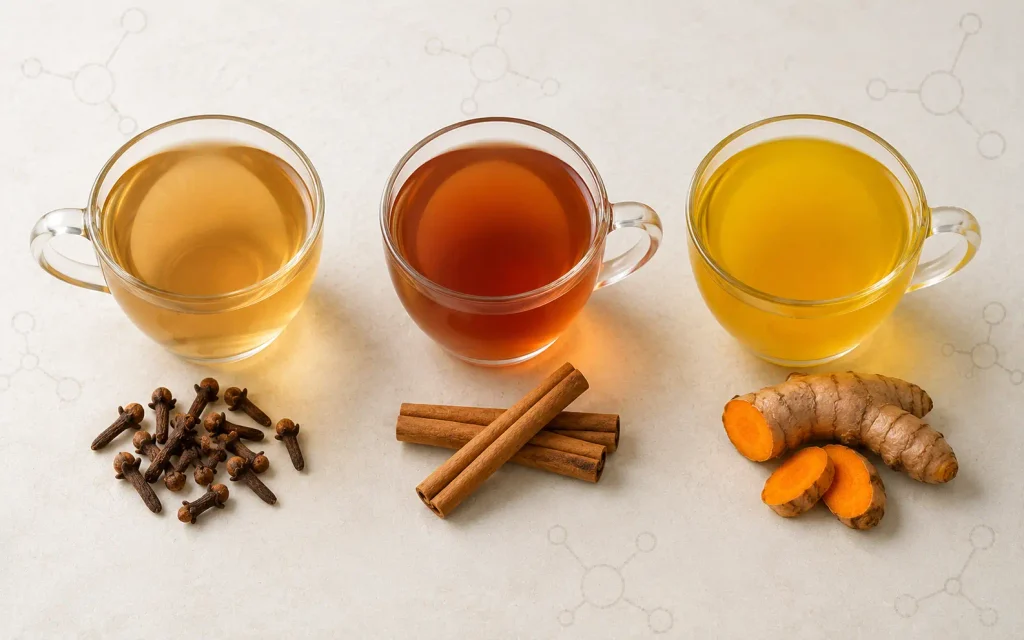
The basic idea is appealing. Take a familiar kitchen spice. Add hot water. Let it steep. Drink it every morning.
The drink then gets marketed as a natural way to:
- control blood sugar
- reduce inflammation
- improve digestion
- “detox” the body
- boost immunity
- burn fat
- improve liver health
- prevent disease
Some of these claims have a scientific starting point.
Cloves contain compounds such as eugenol. Cinnamon contains numerous polyphenolic compounds. Turmeric contains curcuminoids, including curcumin.
These compounds can produce interesting biological effects in laboratory studies and have been studied in humans.
But there’s a critical step that is often skipped:
Does the amount of these compounds that actually reaches the body from a cup of homemade spice water produce the same effect seen in a clinical study?
Usually, we don’t know.
The first problem: a spice is not the same as a spice supplement
This is probably the most important point in the entire article.
Imagine a clinical study gives participants 500 mg of a standardized curcumin formulation. You make turmeric water by adding a small amount of turmeric powder to hot water.
It would be tempting to say:
“Turmeric was shown to have this benefit.”
But that’s not necessarily what the study showed.
Homemade spice water
is not equivalent to
The studied extract
The researchers may have tested a concentrated extract with a known amount of curcuminoids. Your homemade drink may contain a very different amount. The preparation changes the exposure.
The same problem applies to cinnamon and cloves.
Water can extract some compounds from plant material, but not every compound dissolves equally well in water. And even when a compound enters the water, that doesn’t guarantee that it will be absorbed efficiently by the human digestive system.
This is particularly important for turmeric.
1. Turmeric water: the most interesting—and most misunderstood
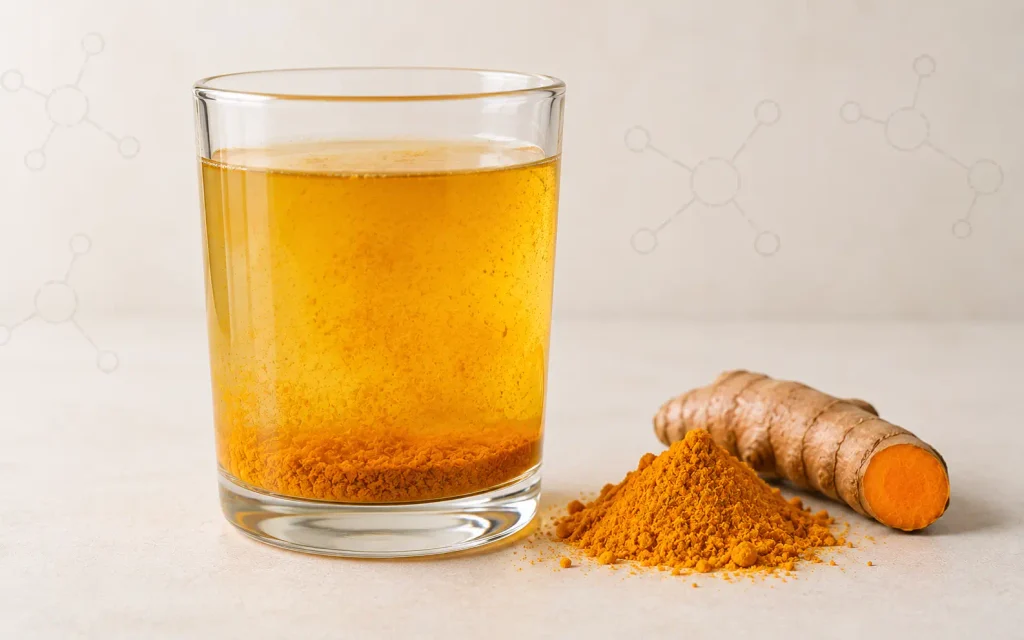
Turmeric is probably the most heavily promoted of these three drinks. Its main compound of interest is curcumin.
Curcumin has been investigated for inflammation, osteoarthritis, metabolic health, liver-related outcomes and many other conditions. And there is a substantial amount of human research.
A 2024 systematic review and meta-analysis included 103 randomized controlled trials involving 7,216 participants and found statistically significant effects for some outcomes, including fasting blood glucose, inflammatory markers, HDL cholesterol and body weight. However, the certainty varied considerably between outcomes, and the authors emphasized the need for better long-term trials.
That sounds impressive. But there’s a catch.
Curcumin does not dissolve well in water. Poor water solubility is one of the major reasons conventional curcumin has low oral bioavailability.
Researchers have developed special formulations specifically to overcome this problem. For example, human pharmacokinetic studies have compared conventional curcumin with formulations designed to increase absorption. Some enhanced formulations produce dramatically higher blood exposure than ordinary curcumin.
This tells us something important: the amount of curcumin you consume isn’t the whole story. How it is formulated can substantially affect how much reaches the circulation.
What about turmeric as a food?
That’s a different question.
A human crossover study compared curcumin powder, turmeric powder and fresh turmeric consumed as part of a meal. The turmeric-containing meals produced higher plasma curcuminoid concentrations than isolated curcumin powder under the conditions tested.
But that still doesn’t prove that turmeric steeped in water delivers the same exposure as a clinical curcumin supplement. It doesn’t.
So does turmeric water reduce inflammation?
The answer: possibly in theory, but the evidence doesn’t establish that ordinary turmeric water is an effective anti-inflammatory treatment.
Human trials of turmeric and curcumin supplementation have reported reductions in some inflammatory markers. For example, a GRADE-assessed meta-analysis of 66 randomized controlled trials found reductions in CRP, TNF-α and IL-6 with turmeric/curcumin supplementation.
But this is where we need to be careful. A change in a blood biomarker does not automatically mean “you will feel healthier.” And a study using a concentrated supplement doesn’t automatically tell us what happens after drinking a weak homemade infusion.
A 2025 critical umbrella review also found potentially beneficial effects across several outcomes but noted that the methodological quality of the underlying meta-analyses was relatively poor.
Verdict on turmeric water
Promising compounds. Interesting human evidence for some turmeric and curcumin preparations. Insufficient evidence that ordinary turmeric water produces those same clinical effects.
2. Cinnamon water: does it really control blood sugar?
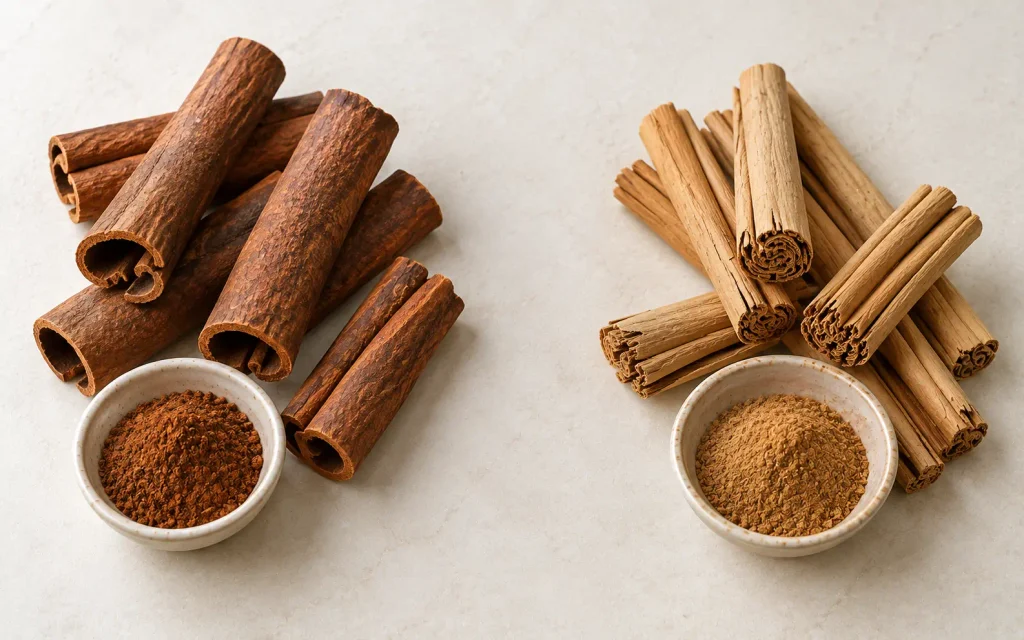
Cinnamon has a somewhat stronger case when it comes to metabolic research.
Researchers have conducted numerous randomized trials examining cinnamon supplementation and blood glucose.
An updated systematic review and dose-response meta-analysis of 24 randomized controlled trials in people with type 2 diabetes found statistically significant reductions in fasting blood sugar, HOMA-IR and HbA1c with cinnamon supplementation.
Another meta-analysis found reductions in fasting glucose but noted substantial heterogeneity between studies.
So there is a genuine scientific signal. But again: the studies generally used cinnamon supplementation—not necessarily a cup of cinnamon water. And that’s a big distinction.
Cinnamon water vs cinnamon supplement
Suppose a study gives participants a measured amount of cinnamon every day. The researchers know approximately:
- which cinnamon was used
- how much was consumed
- how long participants consumed it
- what outcomes were measured
Now compare that with homemade cinnamon water. The amount of cinnamon can vary. The species can vary. The extraction can vary. The amount actually consumed can vary. And the concentration of individual compounds isn’t necessarily standardized.
The NCCIH specifically notes that cinnamon research is difficult to interpret because studies don’t always clearly identify the species or part of the cinnamon plant being tested.
That’s not a minor detail. Cassia cinnamon and Ceylon cinnamon are chemically different. One major difference involves coumarin.
The coumarin issue
Cassia cinnamon can contain substantially more coumarin than Ceylon cinnamon.
Coumarin isn’t simply a “bad chemical.” The problem is that prolonged consumption of sufficiently large amounts of coumarin can be concerning for some people, particularly those with liver disease.
NCCIH notes that cinnamon is generally safe in amounts commonly used as a food spice, but larger amounts or prolonged use can cause problems, and some cassia products contain relatively high levels of coumarin.
This creates an important practical lesson:
More cinnamon is not automatically better. And turning a spice traditionally used in small culinary amounts into a concentrated daily “health drink” changes the exposure.
Verdict on cinnamon water
There is some human evidence for cinnamon supplementation and glucose-related outcomes. But we cannot automatically transfer those results to homemade cinnamon water. And consuming large amounts every day is not necessarily safer or more effective.
3. Clove water: what about blood sugar and digestion?
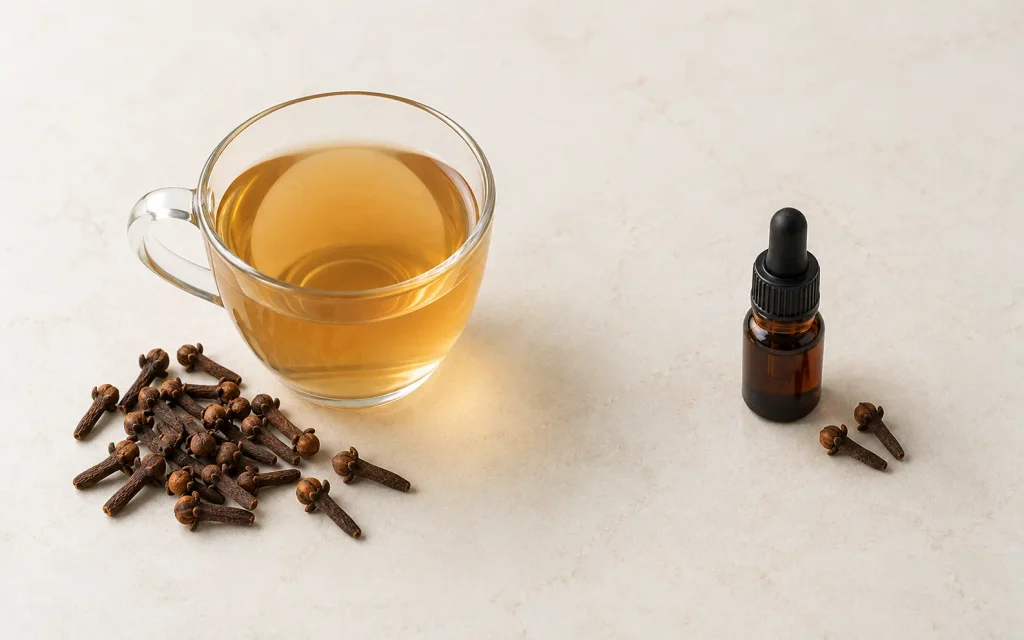
Clove may be the weakest of the three when it comes to human clinical evidence.
Cloves contain eugenol, along with other phytochemicals. Laboratory research has produced interesting findings involving antioxidant, antimicrobial, anti-inflammatory and metabolic pathways.
But laboratory activity is not the same as a proven health effect in humans.
There is at least some human evidence worth discussing.
A small open-label pilot study tested a water-soluble polyphenolic extract of clove buds in 13 otherwise healthy volunteers. Participants consumed 250 mg of the extract once daily for 30 days. The researchers reported reductions in some pre- and post-meal glucose measurements.
Interesting? Yes. Conclusive? No.
Why? Because the study was:
- very small
- open-label
- short-term
- based on a standardized extract
- not a randomized placebo-controlled trial of ordinary clove water
So we cannot take this study and conclude “drink clove water every morning to control blood sugar.” That leap goes far beyond the evidence.
What about clove water for digestion?
This claim is particularly common.
Clove is traditionally used in various cultures for digestive complaints. But traditional use is not the same as clinical proof.
The available human research does not establish that a homemade cup of clove water reliably improves digestion in healthy people.
And there is another important issue: clove oil is not the same thing as clove water.
Eugenol is highly concentrated in clove essential oil. Swallowing concentrated clove oil is completely different from drinking a mild infusion made from whole cloves.
High doses of eugenol can cause toxicity, and severe liver injury has been reported after high-dose ingestion of clove oil or eugenol. So “natural” should never be interpreted as “concentrated amounts are automatically safe.”
Verdict on clove water
There is preliminary human research involving a standardized clove extract, but evidence for homemade clove water is insufficient.
The “detox water” problem
This is where these drinks often become associated with another popular claim: “they detox your body.”
But what does “detox” actually mean?
Your body already has systems responsible for processing and eliminating many substances, including the liver, kidneys, lungs and gastrointestinal tract.
Drinking water can obviously contribute to hydration. Adding a spice may add flavor and small amounts of plant compounds.
But there is no good evidence that a daily cup of clove water, cinnamon water or turmeric water “flushes toxins” from the body in the way social-media detox claims imply.
A drink can contain biologically active compounds without being a detox treatment.
What about weight loss?
This is another common claim.
You’ll often see statements that cinnamon water or turmeric water:
- “melts belly fat”
- “boosts metabolism”
- “burns fat overnight”
- “detoxes fat from the liver”
The evidence does not justify those promises.
Some cinnamon supplementation studies have reported changes in glucose or certain metabolic markers, but that doesn’t mean cinnamon water causes meaningful weight loss.
For example, one systematic review found no significant effects of cinnamon supplementation on body weight or BMI despite effects on some glucose measures.
Similarly, turmeric and curcumin research has investigated body weight and metabolic markers, but the evidence is heterogeneous and largely concerns supplementation rather than homemade turmeric water.
Verdict: there is no good evidence that these drinks are fat-burning beverages.
What about “anti-inflammatory” drinks?
This claim requires another important distinction.
A compound can demonstrate anti-inflammatory activity at very different levels of evidence:
- In a test tube
- In an animal
- In a human blood biomarker
- In symptoms
- In a clinical outcome
These are not interchangeable.
Curcumin, for example, has substantial mechanistic research behind it. Human trials also exist. But the fact that curcumin can influence inflammatory markers doesn’t mean a cup of turmeric water will treat an inflammatory disease.
That’s why evidence-based nutrition needs to ask what was actually tested—not simply, does this plant contain an interesting compound?
Why water changes the story
Here’s the hidden problem with most online “spice water” claims.
A recipe might say: add one teaspoon of turmeric to hot water. But scientific research doesn’t necessarily study that preparation.
| What researchers may have used | Standardized extract → known concentration → controlled dose → specific formulation → measured outcome |
|---|---|
| What your kitchen version may be | Variable amount → variable extraction → variable concentration → unknown bioavailability |
This doesn’t mean homemade spice drinks are useless. It means we shouldn’t promise a clinical effect that hasn’t actually been demonstrated.
A better way to think about these drinks
Instead of asking “does turmeric water work?” ask:
- What compound are we interested in? Turmeric → curcuminoids. Clove → eugenol and polyphenols. Cinnamon → numerous polyphenolic and aromatic compounds.
- Was that compound actually tested in humans? Sometimes yes.
- What form was tested? Food, powder, tea, extract, capsule, standardized supplement or enhanced formulation? This is crucial.
- Was the amount comparable? Often we don’t know.
- Was the outcome clinically meaningful? A change in a biomarker isn’t automatically a meaningful health outcome.
This five-step approach prevents a huge amount of nutrition misinformation.
So which one “works” best?
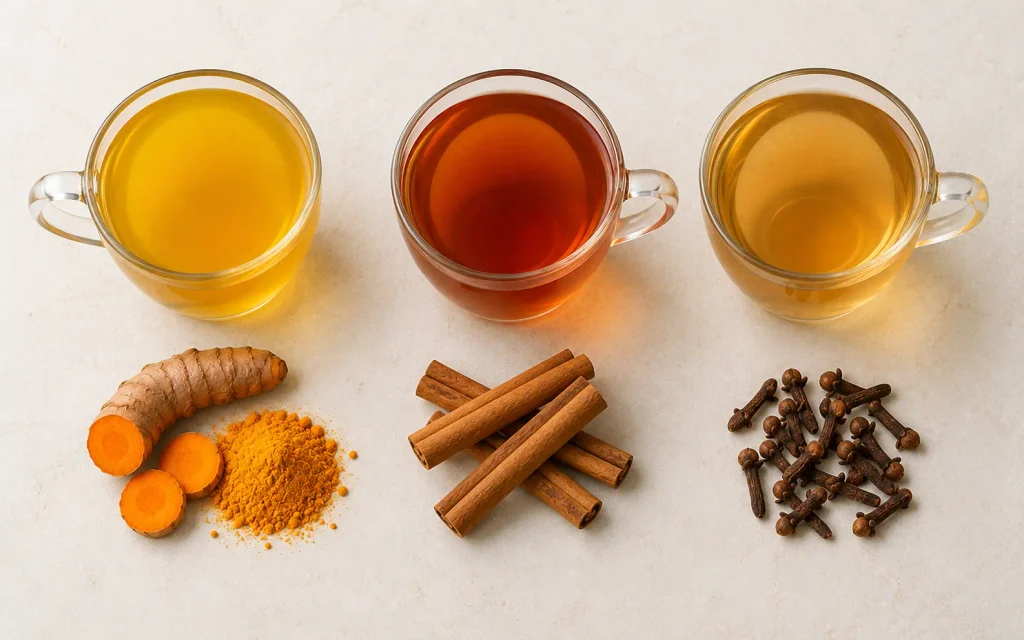
If we compare the evidence rather than the internet hype:
| Drink | Human evidence | What looks promising | Main problem |
|---|---|---|---|
| Turmeric water | Moderate, for some turmeric/curcumin preparations | Inflammatory and metabolic markers | Most research isn’t on ordinary turmeric water; curcumin has poor water solubility |
| Cinnamon water | Moderate, for cinnamon supplementation and some glucose measures | Fasting glucose and some metabolic markers | Species, dose and preparation vary; evidence remains inconsistent |
| Clove water | Limited | Preliminary glucose findings from a small extract study | Very little direct evidence for homemade clove water |
| All three as “detox drinks” | No convincing evidence | Hydration and flavor | “Detox” claims aren’t supported |
The most important difference: food vs supplement
There’s nothing inherently wrong with using these spices in food. In fact, that’s probably the simplest way to think about them.
Turmeric can add flavor and color. Cinnamon can replace some added sugar in certain foods. Cloves can contribute flavor and aroma. And spices can make nutrient-dense meals more enjoyable.
The problem begins when we turn a culinary ingredient into a quasi-medical treatment without evidence that the preparation actually delivers the studied dose.
What about drinking them every day?
For ordinary culinary quantities, these spices are generally used safely by many people.
But “every day” becomes a different question when someone is consuming concentrated preparations.
Cinnamon
NCCIH says cinnamon is likely safe in amounts commonly used in food, while larger or prolonged amounts can cause gastrointestinal or allergic effects. Cassia cinnamon’s coumarin content can also be relevant, particularly for people with liver disease.
Turmeric
NCCIH notes that conventional oral turmeric is likely safe for most people in recommended amounts for up to a few months, but gastrointestinal effects can occur. More importantly, some high-bioavailability curcumin products have been associated with liver injury.
This does not mean ordinary culinary turmeric is dangerous. It means concentrated supplements and specially formulated products shouldn’t automatically be treated as equivalent to food.
Clove
Whole cloves used as a culinary spice are very different from concentrated clove oil. High-dose eugenol or clove-oil ingestion can be toxic, including serious liver injury after overdose.
“Natural” doesn’t mean “dose doesn’t matter”
This may be the most useful takeaway.
Many people assume: natural → safe → more is better.
Nutrition doesn’t work that way. A plant can contain compounds that are useful at one exposure and problematic at another.
The biological effect depends on dose × preparation × duration × absorption × individual factors.
That’s why clinical research measures doses rather than simply asking whether a plant is “healthy.”
Should you drink these health drinks?
If you enjoy them as flavored beverages, there’s little reason to treat them as forbidden.
But don’t expect a cup of spice water to replace:
- a balanced diet
- adequate protein
- fruits and vegetables
- physical activity
- sleep
- medical treatment
- medication when prescribed
And don’t use them as a substitute for treatment of diabetes, liver disease, arthritis or other medical conditions.
A reasonable way to view them:
| Turmeric water | A flavorful drink containing turmeric compounds, but not a proven anti-inflammatory treatment. |
|---|---|
| Cinnamon water | A flavorful way to consume cinnamon, with some interesting glucose research—but not a replacement for diabetes treatment. |
| Clove water | A flavorful clove infusion with limited direct clinical evidence—not a proven detox or blood-sugar therapy. |
The bottom line
Clove water, cinnamon water and turmeric water are not simply “fake.” The spices contain real biologically active compounds, and researchers have found interesting effects in human studies.
But here’s where the internet often makes the leap: a compound has an interesting biological effect → a concentrated extract shows an effect in a clinical trial → therefore, drinking homemade spice water must produce the same health benefit. That final step is often unsupported.
The evidence is strongest for some specific cinnamon and turmeric/curcumin interventions, particularly around certain metabolic or inflammatory markers—but the exact preparation matters enormously.
For clove, human evidence is much more preliminary, and the available glucose study tested a standardized extract rather than homemade clove water. And for all three, there is no good evidence that these drinks “detox” your body or magically burn fat.
So enjoy them if you like them. But don’t confuse a traditional drink with a clinically proven treatment. The real question isn’t whether the spice works. It’s: does the dose, preparation and form you actually drink contain enough of the active compounds to reproduce the effect seen in research? For homemade spice water, we often simply don’t have that evidence yet.
Frequently asked questions
Does turmeric water reduce inflammation?
Turmeric and curcumin supplementation has been associated with reductions in several inflammatory markers in randomized trials, but there isn’t enough evidence to conclude that ordinary homemade turmeric water produces the same effect. Curcumin also has poor water solubility and bioavailability.
Can cinnamon water lower blood sugar?
Cinnamon supplementation has shown reductions in fasting glucose in several meta-analyses, but the studies differ substantially in dose, species and preparation. This does not establish that homemade cinnamon water will produce the same effect.
Is clove water good for diabetes?
There is preliminary human research involving a standardized water-soluble clove extract, but the evidence is very limited. A small open-label pilot study involved only 13 participants and did not test ordinary homemade clove water.
Does turmeric water detox the liver?
There is no good evidence that drinking turmeric water “detoxes” the liver. Turmeric and curcumin are being studied for several liver-related outcomes, but this is different from proving that a homemade drink detoxifies the liver.
Does cinnamon water burn belly fat?
There is no convincing evidence that cinnamon water is a fat-burning drink. Some cinnamon supplementation studies have found metabolic effects, but weight-related results are inconsistent and do not establish a meaningful fat-loss effect from cinnamon water.
Is turmeric more effective with black pepper?
Piperine from black pepper can substantially increase the bioavailability of curcumin, which is why some commercial curcumin formulations combine the two. However, greater absorption does not automatically mean greater clinical benefit, and highly bioavailable curcumin products have their own safety considerations.
Is cinnamon water safe every day?
Cinnamon used as a culinary spice is generally considered safe. Larger or prolonged consumption deserves more caution, particularly with cassia cinnamon because of its coumarin content.
Is clove water the same as clove oil?
No. Clove oil is much more concentrated in volatile compounds such as eugenol. High-dose ingestion of clove oil can cause serious toxicity, including liver injury.
Evidence snapshot
Turmeric / curcumin — moderate, but preparation-dependent
Large numbers of RCTs and meta-analyses suggest possible effects on inflammatory and metabolic markers. However, evidence quality varies, formulations differ, and curcumin’s poor bioavailability makes it inappropriate to assume that ordinary turmeric water behaves like a concentrated supplement.
Cinnamon — moderate for some metabolic markers
Multiple meta-analyses report reductions in fasting glucose, with some studies reporting effects on HbA1c. However, substantial heterogeneity exists, and NCCIH concludes that evidence does not clearly establish cinnamon as an effective treatment for a health condition.
Clove — limited
A very small pilot study of a standardized water-soluble clove extract reported glucose-related effects. This is insufficient to establish benefits from homemade clove water.
Detox claims — not supported
There is no convincing evidence that these drinks “flush toxins” from the body.
Weight-loss claims — weak or unsupported for the drinks themselves
Some metabolic effects have been investigated, but these do not establish that spice water causes meaningful fat loss.
Editorial fact-check
| Popular claim | Evidence verdict |
|---|---|
| Turmeric water is strongly anti-inflammatory | ⚠️ Overstated |
| Curcumin has human clinical research behind it | ✅ Yes |
| Turmeric water is equivalent to curcumin supplements | ❌ No evidence |
| Cinnamon water controls blood sugar | ⚠️ Possible, but unproven for the drink itself |
| Cinnamon supplementation can affect fasting glucose | ✅ Supported by several meta-analyses |
| Cinnamon water burns belly fat | ❌ Not established |
| Clove water controls diabetes | ❌ Insufficient evidence |
| Clove extract has preliminary glucose research | ⚠️ Yes, but very limited |
| These drinks detox the body | ❌ Unsupported |
| These drinks automatically cause weight loss | ❌ Unsupported |
| More spice means more benefit | ❌ Incorrect |
| Culinary use and concentrated supplementation are equivalent | ❌ Incorrect |
| Natural products can have dose-related risks | ✅ Yes |
The NutriFoodGuide takeaway
Don’t throw away your spices. But don’t turn them into miracle cures either.
The science actually gives us a more interesting story. Cloves, cinnamon and turmeric contain biologically active compounds. Some of those compounds have been studied extensively. Some human trials are promising.
But the form, dose, preparation and bioavailability determine how much of that science applies to the drink sitting in your kitchen.
So if you enjoy a cup of cinnamon water or turmeric water, there’s no need to call it useless. Just call it what it actually is: a spice-infused drink—not a proven medicine.
Sources
- National Center for Complementary and Integrative Health. Turmeric: Usefulness and Safety. nccih.nih.gov
- National Center for Complementary and Integrative Health. Cinnamon: Usefulness and Safety. nccih.nih.gov
- Moridpour AH, Kavyani Z, et al. The effect of cinnamon supplementation on glycemic control in patients with type 2 diabetes mellitus: an updated systematic review and dose-response meta-analysis of randomized controlled trials. Phytother Res. doi:10.1002/ptr.8026
- Jafari A, Abbastabar M, Alaghi A, Heshmati J, Crowe FL, Sepidarkish M. Curcumin on human health: a comprehensive systematic review and meta-analysis of 103 randomized controlled trials. Phytother Res. 2024;38(12):6048–6061. doi:10.1002/ptr.8340
- Critical umbrella review of curcumin and multiple health outcomes. PubMed.
- Water-soluble polyphenol-rich clove extract lowers pre- and post-prandial blood glucose levels in healthy and prediabetic volunteers: an open label pilot study. BMC Complement Altern Med. 2019;19(1). doi:10.1186/s12906-019-2507-7
- Human pharmacokinetic research on curcumin bioavailability and water solubility. PubMed.
- Human crossover study on food matrix, turmeric preparations and curcuminoid bioavailability. PubMed.
- National Institute of Diabetes and Digestive and Kidney Diseases. LiverTox: Eugenol (Clove Oil). ncbi.nlm.nih.gov/books
- U.S. Department of Agriculture. FoodData Central. fdc.nal.usda.gov
Continue exploring
Related interactions
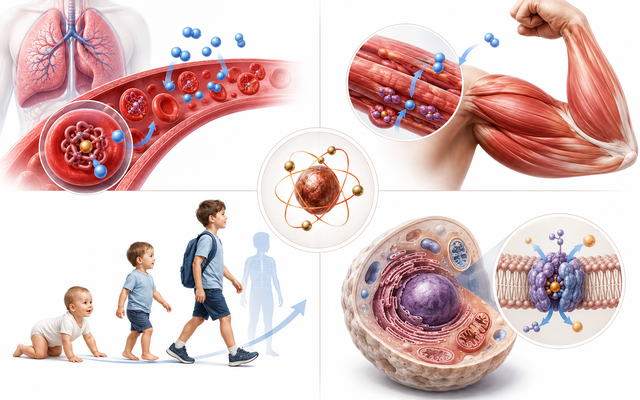
Heme and non-heme iron: why the form matters more than the number
Journal
Almost every interaction in the Atlas that involves iron comes with a qualifier: non-heme iron. That word is doing a lot of…